

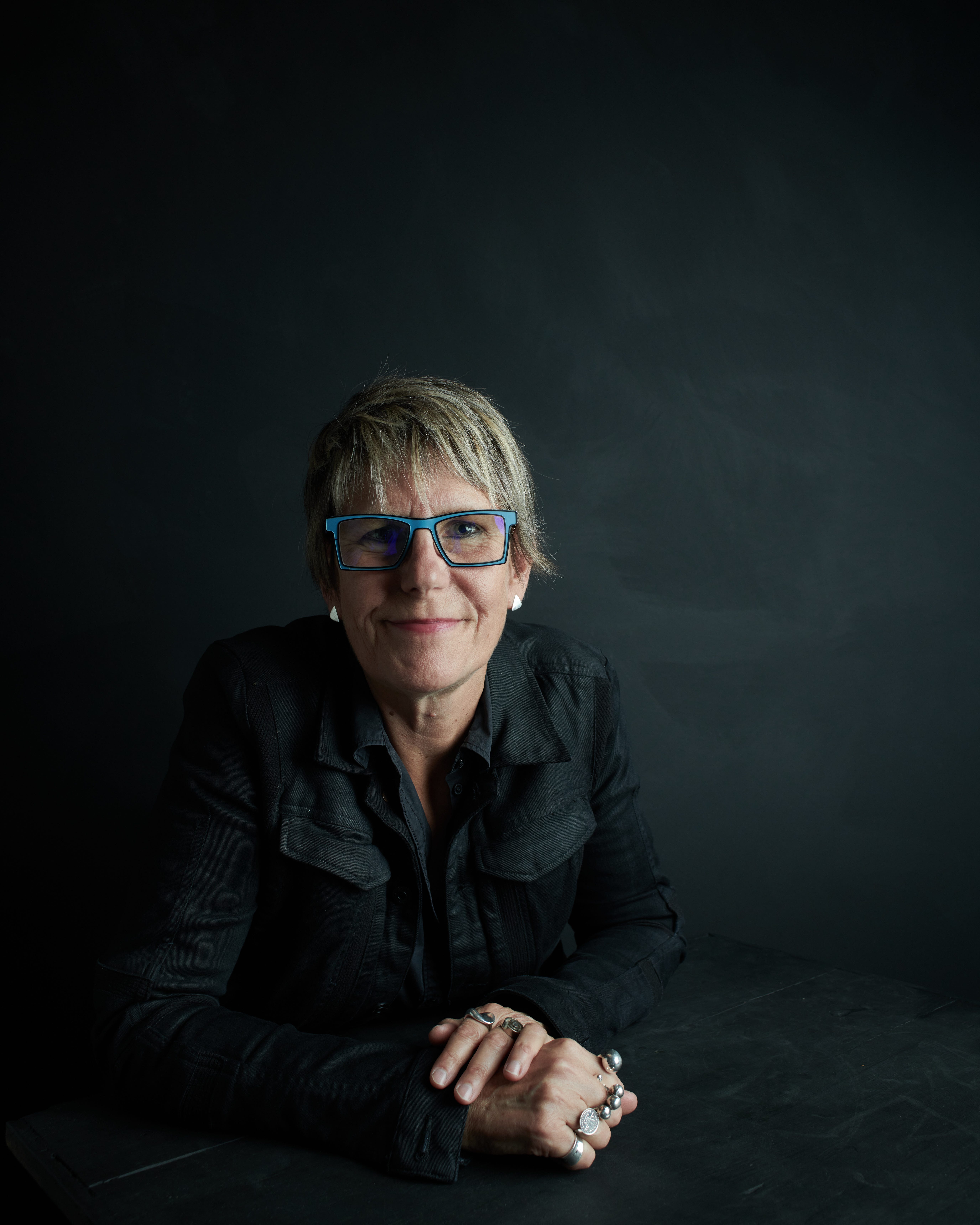
You have an extensive background in advertising, can you tell us about that chapter and what drew you to move across into the screen industry?
I was very fortunate to spend most of my advertising career at Clemenger BBDO Melbourne – with a one-year stint in the Paris office.
It was a very television commercial centric agency with blue-chip clients and big production budgets. So I spent my life writing – and later directing – big budget TVCs for major brands. I worked with some amazing directors like Ray Lawrence and David Deneen, and got to see some extraordinary crews in action. I still remember a Libra commercial where Mandy Walker was DP. I was looking at the split, baffled by what she was creating on screen with natural light. Or the cinematographer who had worked with Fellini who shot a commercial of mine at Pinewood Studios, I can still remember what he did with light. It was always 35mm and Arri Alexas, such a joy.
It was fast. It was furious. You were constantly pitching. And constantly having to get clients over the line. On the budget, on the cast, on the script, on everything. I loved my time in advertising. I ended up on the Board, did a stint as Director of Strategy Planning, but at the end of the day you’re flogging tampons or paint. And telling stories in under 60 seconds.
I simply wanted more time, and more meaning. I had written the first draft of a feature while I was in Paris. And had made my first award winning 16min short Just Do It. I thought I was set to launch into feature films.
I try to find a way to create without seeking permission. Having agency is all important to me. I will back myself, because I’m not prepared to wait around to be anointed.
You have experimented with many mediums including a scripted short that premiered at Tropfest (and with a million views on YouTube), a crime podcast and now a feature doco - how do you view your slate and what makes you decide to attach or commit to a certain story?
What followed that stellar advertising career was years of frustration.
For the first time in my life, being a female creative felt like a liability. My female perspective was absolutely valued in the commercial world, advertisers knew the purchasing power of women and understood how I could unlock that market for them.
I spent the first 10 years post advertising, writing half a dozen screenplays and making little headway. It was a time of peak “male hero’s journey”, both on and off the screen. So I kept producing other things – Boobytrap underwear, Funny Feelings childrens’ books, apps, and resources.
But I was genuinely sad about not making films. So I took an idea from one of my features and wrote a short with the aim of getting it into a top tier European festival. That was Lost Soul and it was selected for Sitges, which was a deep irony because Screen Australia wouldn’t consider if for post funding because I hadn’t had a film selected for a top tier festival before. And then it got into one, without their help. So I hit them up for funding to get me to the premiere in Spain.
A month after I returned, I was filming The Birth for Tropfest. It was a strategic choice. I wanted a write and direct a comedy to counter the rather obscure Euro friendly psychological thriller that was Lost Soul. All of this is produced through my production company, La Vérité Films.
I follow my curiosity. I try to find a way to create without seeking permission. Having agency is all important to me. I will back myself, because I’m not prepared to wait around to be anointed.
The Use Of Force podcast was a serendipitous outcome of Melbourne’s long COVID lockdown. And the documentary is an equally serendipitous outcome from moving to Sydney to develop the Use Of Force crime drama, teaming up with Mark Fennessy at Helium Pictures only to have it stall. So I took to the ocean, which has always restored me.
Can you tell us more about your doco that you are shooting most mornings down at Bondi?
Shark Bait is about a Bondi local who gives up everything to use drone technology to save surfers from man-eating sharks, winning a million fans and the heart of an ocean obsessed primary school teacher. But his obsession with the mythical monsters blinds him to the real killer lurking at the beach. A melanoma diagnosis changes everything.
Since moving to Sydney in 2021, I have gone long on ocean swimming. I was immediately drawn to the extraordinary drone footage Drone Shark App was releasing daily on Instagram, sharks moving in and around surfers and swimmers. Whales and dolphins in the bay. It helped me reframe my Jaws induced fear of sharks, but I could also see the opportunity to unlock the epic footage onto a big screen. I just wasn’t sure if there was a story there. So I just started filming.
The ocean obsessed primary school teacher – Ange Curry – is in my swim group and we take GoPros on every swim. And her partner, Jason Iggleden aka ‘Drone Shark’ is Sydney’s go-to guy on sharks. So I can, and have, literally sit on the end of their bed as they get up, to follow the story.
He is a Don Quixote character, a would-be saviour driven by dreams. And the folly of his mission is revealed when a chance encounter with a dermatologist on the beach leads to a melanoma diagnosis. The real risk at the beach isn’t in the water. But high up in the sky. Capturing that story as it unfolds has been a gift.
Shark Island Foundation has given us a generous development grant. There’s some international interest. We need to get a local distributor on board. And I am talking to potential production partners to unlock Screen Aus funding. Whether we manage a decent budget or a micro budget, we will make a film.


Another part of your producing that I really admire is your sense of presence and the idea of bringing your everyday life into your work and vice versa. Can you articulate your philosophy on this and has it always been something that guides you or did you learn it over time?
It was Ray Lawrence who taught me about the importance of having agency – the freedom to shape one’s own life. He talked about having a nervous breakdown after directing his first film Bliss. Despite making it into competition for the Cannes d’Or, the film had a rocky start and Ray described feeling powerless during the production. And it really affected him. By contrast I shot a commercial with him straight after he filmed Lantana, and he was in a state of bliss. The experience had been transformed by having more agency in that production.
I really took that on-board. A lot of people dream of making a feature film. My dream has always been to make a feature film, and do it with agency. It requires you to say no sometimes which can be difficult. But it’s a choice. And I love knowing I have a choice. The rest is just an adventure.
What's next for you?
I am still working closely with the whistleblowing female police officer from Use Of Force. There may be a factual project there. Which could also help find market interest for the drama.
What does being a Vixen mean to you and / or have you experienced any sort of transformation, career wise, since becoming a Vixen?
The younger me would never have joined Screen Vixens. I thought we’d won the fight for equality. I honestly didn’t see the value in going to women’s networking events. None of it resonated with my experience in the workplace. I know that sounds harsh. And stupid. But that’s just how it was. How I was.
And yet here we are. I love Screen Vixens. I appreciate everything Leonie has done to get it to be this vibrant, generous, talented community where we can learn and share. We have not won the war. The female perspective is more important than ever before. And I love the opportunity to help other women succeed. It was only yesterday that I was urging an uber talented SA filmmaker to join. The transformation is complete. I’m all in.
Anything else you would like to add?
The elephant in the room is always financial viability. Film and television is a brutal industry for indie producers. And development is expensive. My first career has financed my second. It gave me space, while I was learning. It gave me confidence, but that confidence also made me vulnerable to the inevitable failures. I hadn’t had many in my first career, but I have made up for that ever since. But I just feed each humiliation into the next project, and it is transmuted. I did a bit of Creative Brand Consulting in amongst my own projects. And I scaled down. My choices are not for everyone. But the one thing I have learned is to lean into your own idiosyncrasies. In life and in art. And there is a deep peace that comes with that.
How can Vixens stay in touch with you?
Listen to Sarah’s Use of Force Podcast
Sarah’s LinkedIn
Instagram: @sarahhatherley and @sharkbaitfilm_bondi
Tax deductible donations for the documentary most welcome here.
Shark Bait Trailer:
Websites:
Visit Screen Vixens for more info on our membership.
So awesome to read this Sarah, what a journey you have been on and how far you have come since our days in advertising - I love the Shark Bait concept and I have now shared this article and Screen Vixens link with Olive who now has her own aspirations to be a female director. There is so much she can learn from this. Thank you for sharing!
Oh my word, how have I never hear you talk about your podcast before? It's on the listen list now. Good read, well done ladies!